
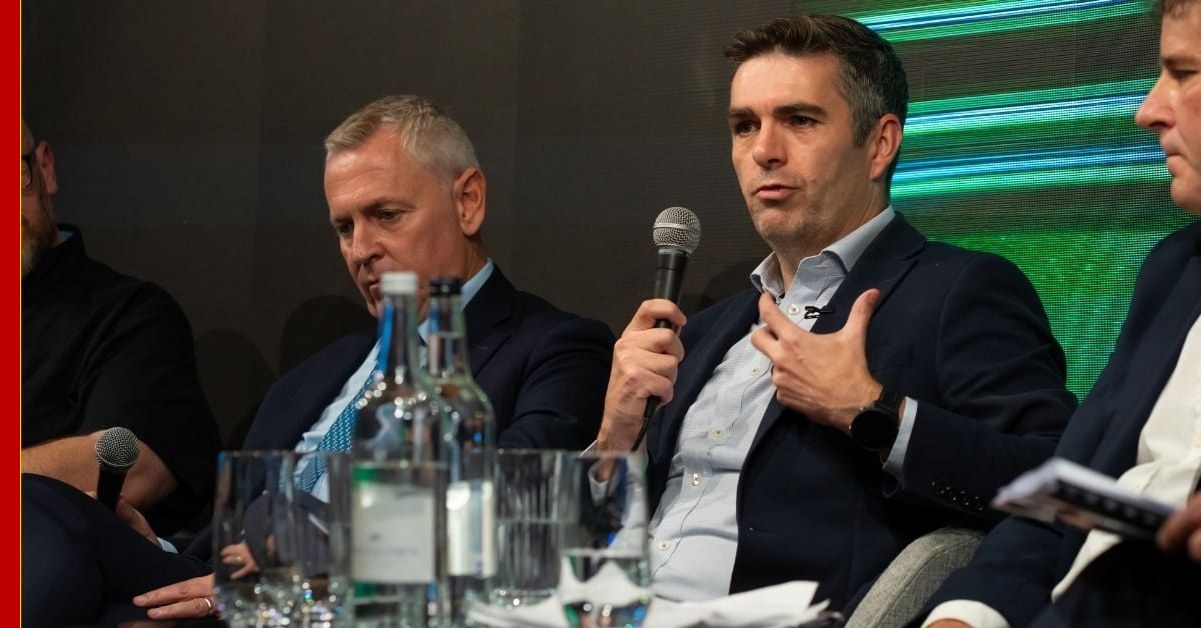
Industry leaders meeting at the Hippodrome this week signalled future capital deployment is at risk unless government provides clarity ahead of autumn budget.
Senior figures from Britain’s land-based gambling sector gathered at the Hippodrome this week to present evidence of the contribution casinos make to local night-time economies, but the most significant messages centred on investment decisions now at risk due to regulatory and fiscal uncertainty.
A panel featuring Night Time Industries Association CEO Mike Kill, Rank Group chief executive Richard Harris, Genting UK CEO Paul Willcock and Regulus Partners’ Dan Waugh examined the state of flux facing much of the UK casino industry.
“If we can get certainty, then investment will flow,” Willcock said.
Kill noted that £200m is scheduled to be invested across the land-based sector over the next five years, “demonstrating an appetite to invest, modernise, and improve the customer experience.”
But with a doubling of Machine Games Duty potentially on the cards in the autumn budget, Harris warned: “Without confidence, things grind to a halt quite quickly.”
Trocadero Conversion Now in Doubt
Genting’s £40m plan to convert the historic London Trocadero building on Coventry Street into a casino received approval from local councillors in 2025. The project forms part of £1bn in UK investment Willcock says Genting has made since entering the market, which has generated around £750m for the Treasury in tax revenues.
The Trocadero revamp and similar projects are intended to benefit surrounding areas. Yet Willcock revealed that future investment is under threat.
“If I were to make that decision as I sit here today, rather than making it two years ago, I think I may have reached a different conclusion,” he said.
Economic Value Beyond the Gaming Floor
The 14 October event was held at the Hippodrome’s Paddy Power sportsbook venue, with the Betting and Gaming Council helping to set it up. Research presented came directly from NITA and aimed to quantify the economic contribution casinos make to surrounding businesses and the wider British economy.
The foundational figure for this argument is that 14 million customer visits to 108 licensed British casinos each year have a gross value added of £815m.
More detailed consumer statistics were also gathered to demonstrate how casinos contribute that value. Responses were gathered from 1,442 UK customers, employees, operators and suppliers across September and October 2026, with 58% of the customer segment suggesting that the casino was the main reason they visited the area when they went out.
Recalling past visits, 72% of customers claimed to have used at least one other local business, spending an average of £86.80 per party outside of the casino itself. Waugh of Regulus Partners did caveat that figure by acknowledging that exact recollections of spend from individuals are not always reliable, although they should still illustrate a useful directional trend.
Survey Methodology and Respondent Profile
A large majority of respondents associated casinos with having a positive impact on communities. With regards to facilitating entertainment, 75% felt that casinos were a social good. In terms of local employment it was 74%. For hospitality: 73%, for tourism: 67%, for night-time footfall: 63%, for local businesses: 60% and for community activity: 52%.
Given that 63% of the respondents identified as casino stakeholders, the positive responses are perhaps less surprising and notable than they would have been had this been a representative poll of the general public. In the methodology section of the report, the NTIA stressed the results ought not be taken as reflective of the general public’s view.
When asked about the 63% respondent weighting, Kill said: “What we tried to do is get around the sort of 50/50 split [general public vs casino attendees], so we get a comparative view.
“I think what we were very conscious of in terms of the survey is that there’s no point going out and talking to consumers that attend casinos without actually adopting a different position and talking to the general public about their perception. So we try to balance that.”
Operators Want 2025 Reforms Given Time to Breathe
The speakers recalled their optimism for growth following earlier 2025 regulatory reforms, which increased the allowance of gaming machines in venues and lifted restrictions on betting facilities in older converted casinos, such as the Hippodrome itself. At that point, it felt investment opportunities were opening up to create casino experiences more akin to those in the US, where hospitality and other forms of entertainment are more significant revenue channels than they are in the UK.
In the research presented by the NTIA, customers indicated that they increasingly wanted casinos to offer more than just gambling.
Kill said: “Exactly 43% identified live music and entertainment as a priority, while 37% wanted improved dining and 37% supported more daytime non-gaming uses. Only 13% felt the future should be only focused on gambling. That’s a really interesting signal about the direction of travel.”
The central rallying call from the NTIA’s report is that industry would like to see the 2025 reforms given a chance to breathe, before more regulation is handed down.
Any MGD Rise Would Cut Tax Take, Rank Says
According to the panellists, a major tax hike would stop that evolution in its tracks before it’s had an opportunity to be realised. In fact, it was suggested that even a minor hike would have a negative impact on the public purse.
Asked how the industry might react to a hike much smaller than the doubling of MGD proposed by the Social Market Foundation, Rank CEO Harris responded: “That’s pretty straightforward. So any increase in MGD would reduce the tax take. So, if the tax rate on machines goes up, then venues become unviable.”
Rank has already closed three UK venues in Swansea, Reading Central and Sunderland during Q3 2026, which it said were no longer economically viable in the medium-term.
On the same point, Genting’s Willcock said: “Everybody won’t feel sorry for casino operators, but we’re on very tight margin structures, typically at earnings before interest and tax below 10%. Our employment bills – because we have very heavy employment costs – are around 35% of our revenues in some parts of London.”
He added: “People are paying 50% gaming duty, so there isn’t a lot left. So any more incremental taxation, as Richard said, will definitely be the death knell for a number of businesses.”