Players report growing harassment from gamblers at tournaments while a former teleprompter operator settles CFTC allegations over insider trading on prediction markets.
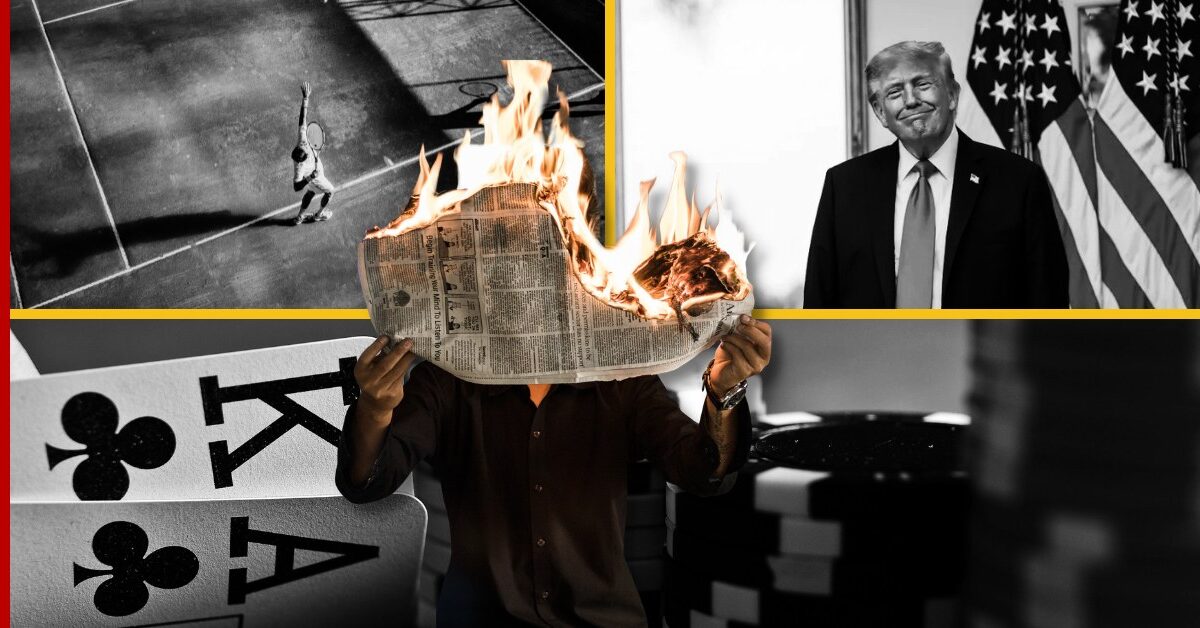
Tennis professionals continue to face increasing disruption from bettors who heckle and distract during matches, raising questions over how the sport balances commercial partnerships with player welfare. The issue came into sharper focus during this year’s US Open, where prediction markets gained prominent sponsorship visibility even as players dealt with escalating in-venue abuse.
Jiri Lehecka described a particularly sustained incident at the tournament in which a spectator spent three sets informing him that he was tired, unable to win, and inferior to his opponent. Lehecka believed the individual had wagered against him and deliberately selected a smaller court to position himself close enough to exert influence. When Lehecka raised the matter with the umpire, he was informed that intervention required the behaviour to cross into explicit abuse.
Lorenzo Musetti and other players have confirmed the pattern extends across Europe and other regions, especially on secondary courts where proximity between spectators and competitors is tighter.
The problem is not confined to stadiums. Players routinely receive threats and abusive messages via social media following matches, with betting losses frequently cited as the motive.
Sponsorship Tensions
The US Open’s agreement with Kalshi positioned prediction content prominently throughout the event this year, embedding betting and trading deeper into the tournament’s marketing while players continued to manage the fallout from such activity. No ATP, WTA or Grand Slam regulation currently addresses disruptive bettors directly. Players remain split between those calling for tighter security measures and those viewing the issue as an unavoidable aspect of professional competition.
New Jersey Councilman Admits Illegal Operation
Prospect Park Councilman Anand Shah has pleaded guilty to racketeering, money laundering and official misconduct following his involvement in an illegal gambling network connected to the Lucchese crime family. The case exposes how illicit operations persist despite New Jersey’s extensive regulated market.
Shah operated as a sportsbook agent and poker manager across restaurants in Morris, Passaic and Bergen counties between 2017 and 2023. Prosecutors say he hosted illegal poker games, coordinated with subagents and collected $900,084 in rakes. Shah also admitted forgiving gambling debts for individuals who contributed to his political campaign, converting illegal proceeds into campaign finance.
Authorities believe the network produced $4.8m in suspected criminal proceeds, using shell companies and legitimate businesses to launder funds. Forty-two people have been charged, with 38 already entering guilty pleas. Shah resigned following the disclosure of his plea agreement, having remained in office since his indictment in April 2025 despite public pressure. Prosecutors are recommending a 10-year state prison sentence and a permanent bar from public office.
Former White House Staffer Settles Insider Trading Allegations
Gabriel Perez, a former White House teleprompter operator, has been ordered to surrender more than $100,000 in profits, pay a $65,000 civil penalty and accept a three-year trading ban after settling allegations that he misused non-public information to trade on Kalshi. The Commodity Futures Trading Commission found Perez earned $107,500 between December 2025 and February 2026 by wagering on words and phrases scheduled to appear in Donald Trump’s speeches.
Perez held access to speech content before delivery, information the CFTC said he misappropriated in breach of his duty as a White House employee. Kalshi’s surveillance systems identified trading patterns inconsistent with typical activity, prompting the company to freeze Perez’s account and lock more than $90,000 in profits before referring the matter to the regulator.
The White House had already cautioned staff in March against using non-public information to trade on prediction markets. For Kalshi, the episode provides a test of the surveillance infrastructure that exchanges will require as prediction products expand into mainstream markets.